Understanding GIS fundamentals and core concepts
GIS stands for Geographic Information System, which is a technology for handling location-based data. In essence, GIS assists users in collecting, organizing, validating, and visualizing information that corresponds to a location on the planet. This allows users to visualize trends, monitor transformations, and decide according to location. One massive factor that makes GIS so cool is its capacity to connect data and statistics with actual locations on the map. This allows you to associate information about, for example, precipitation, vegetation, or roadways to precise locations using latitude and longitude coordinates.
Spatial relationships are central to GIS. They illustrate how things are spatially related to one another. For instance, it might be used to identify whether a school is near a dangerous road, or a river runs through a farm, or how city expansion coincides with green spaces. This spatial connection allows them to query such things as ‘What locations are most vulnerable to flooding?’ or ‘Where do they live furthest from clean water?’. By connecting data to maps, GIS helps us make sense of patterns and problems in the real world.
GIS works with two main types of data: vector and raster. Vector data represents shapes with points, lines, and polygons. These work great for things like roads, borders, or plots of land. Raster data subdivides space into grid cells, each of which has a value. These correspond to something like satellite photos, land cover maps, or temperature maps. Both provide a different lens on the world. Vector is perfect for distinct boundaries and countable items, whereas raster represents gradual variations, such as precipitation or temperature.
| Feature | Vector Data | Raster Data |
| Structure | Points, lines, polygons | Gridded cells (pixels) |
| Best for | Roads, borders, sites | Photos, temperature, land cover |
| File size | Smaller for simple shapes | Larger, depends on resolution |
| Use case | Mapping property lines | Modeling soil moisture |
Another fundamental concept in GIS is the map scale. Scale shows how much a map has shrunk the real world. For example, a scale of 1:100,000 means 1 cm on the map is 1 km on the ground. Selecting the appropriate scale is crucial, as a small-scale map represents a large area with minimal details, whereas a large-scale map depicts a small area in great detail.
The idea of projections is essential. Because Earth is round but maps and screens are flat, GIS employs projections to move the curved surface to a flat one. Each method introduces some distortion, so choosing the appropriate projection can minimize area, distance, or shape errors.
GIS is great for contrasting nature and human development. It might involve monitoring urban expansion compared to deforestation, or charting the transmission of illness against wells. Temporal GIS allows users to view change over years or decades, such as a slideshow of river meanders or urban expansion. For more ancient maps, you may have to scan or trace them to use in a digital GIS.
Accessing and utilizing GIS tools effectively
GIS tools allow users to access and process geographic data. With most data tagged with some location, these tools enable you to see trends, solve problems, and plan smarter. Today, GIS tools can run on a desktop, a local or remote server, or live fully in the cloud. This simplified collaboration for teams everywhere, who can now share results and update data in real time. Perhaps even more importantly, the advent of cloud computing and easy-to-use apps made mapping more accessible and useful to many different groups, not just large corporations or governments.
Common GIS software packages are ArcGIS, QGIS, and Google Earth Engine. ArcGIS is the most feature-rich and is often used by large organizations. QGIS is open-source and runs on most platforms, which is why it remains a favorite among those who require versatility or want to bypass licensing costs. Google Earth Engine excels at cloud-based analysis and handling massive datasets, such as satellite imagery. All of these platforms provide users with a graphical interface to upload, display, and manipulate geospatial data, enabling them to create maps and perform analysis.
To use GIS tools well, it’s crucial to know how to import, manage and transform spatial data sets. Most GIS tools allow users to import data from files (such as shapefiles, GeoJSON, or CSV), web services, or databases. After the data loads, you can browse it, sorting, grouping, or filtering by location, time, or other characteristics. For instance, in public health, a user could import disease case data and overlay it with population maps to identify risk zones. In infrastructure planning, teams can overlay road networks with land use maps to identify the ideal location for new projects. Tools to edit features, join tables, or run queries are integrated into most GIS programs, so it’s easy to update and scrub data where necessary.
Customizing toolbars and workflows saves time and reduces errors, particularly for repetitive tasks. A good checklist for setting up your workspace might look like this: review which tools you use most, set up shortcuts for them, group tools into task-based toolbars, save your workspace layout, and adjust default settings to fit your typical projects. To the user, these steps mean they spend less time searching for tools and more time crafting maps and analysis.
Creating presets for standard work reduces busywork. For example, city planners can prepare map templates with standard layers, such as roads, utilities, and zoning, so every new project begins with the same foundation. In disaster response, teams could create presets for disaster zones and shelter locations, allowing them to update maps quickly as new data arrives. This aids users in maintaining workflow consistency, adhering to benchmarks, and ensuring teams remain synchronized.

Data visualization techniques for spatial analysis
It’s a fascinating field that shapes much of the tech we use every day. It’s about data visualization techniques for spatial analysis, helping people see and understand patterns, trends, and connections across the globe. In GIS, good mapping and intelligent displays are crucial to rendering large complicated datasets more understandable.
Thematic mapping is a primary tool for communicating spatial data. Choropleth maps shade regions to indicate the level of a variable, which is useful for showing, for example, population density or incidence of disease by country. Heat maps color where events occur more. With these maps, it is easy to identify hotspots or clusters, such as traffic jams in urban areas or animal migration in national parks. Graduated symbols or proportional symbol maps use dots or other shapes that expand or contract with the value they represent. They are great for displaying quantities or counts, like the number of stores in each city.
Hexagonal binning maps divide an area into a hexagonal grid. They’re useful when you have a lot of points, like mapping check-ins at a park or pollution readings. By aggregating data into hexes, patterns leap out free of overlapping point clutter.
Another great way to explore is with layering. By layering various datasets onto the same map, you can juxtapose factors against one another. For instance, if you overlay land use with rainfall data, you might be able to explain why some areas flood more frequently than others. Vector data consisting of points, lines, and polygons allows users to designate features such as roads, lakes, or blocks of a city. Raster data, a matrix of cells with values, is ideal for remote sensing imagery. Satellite, aircraft, or drone images will show land cover change, soil moisture, or crop health in many scales and times.
Cartographic generalization is to cartography as data visualization is to spatial analysis. It’s about selecting what’s important and filtering out the noise. This keeps maps legible and effective, even when the data is intricate.
Interactive dashboards and story maps bring all of these tools together in one place. Dashboards allow users to zoom, filter, and click for additional information, which is useful in areas such as public health or logistics. Story maps combine narrative text and images with maps to take users on a journey through a subject, like a city’s expansion or the path of an ambulance. These tools help many more people internalize key takeaways without sinking into deep GIS expertise.
Spider or flow maps illustrate how things connect or move. For example, they show how consumers move from home to a retail store. GNSS contributes an additional dimension by providing real-time, centimeter-level positioning for monitoring vehicles or animals over vast regions.
- Key visualization techniques and best-use scenarios: * Choropleth maps: Visualize regional trends and compare areas.
- Heat maps: Reveal density or intensity of events or features.
- Graduated/proportional symbols: Show quantitative differences across locations.
- Hexagonal binning: Summarize dense point data for clearer patterns.
- Layering: Combine multiple data sources to find relationships.
- Interactive dashboards: Allow real-time exploration and analysis.
- Story maps: Communicate findings with rich, guided narratives.
- Spider/flow maps: Track movement and connections.
- Remote sensing imagery: Monitor broad-scale changes and surface conditions.
Integrating real-time data, drones, and sensors in forest planning
About: Redefining expert forest management with real-time data, drones, and sensors. These technologies provide transparent, current data on expansive and remote locations, facilitating proactive risk detection, monitoring of changes, and long-term planning. They assist foresters in making more informed decisions, resulting in more vibrant forests and more intelligent use of the land.
Live sensor feeds and satellite images monitor forests as conditions evolve. Sensors can monitor factors such as soil moisture, air quality, and tree health, indicating early signs of disease or pests. Satellite images, now clearer and more frequently updated with advances in technology, reveal general patterns and assist in identifying issues such as fires, unauthorized logging, or storm damage. When sensor data is combined with these images, it provides a fuller picture of what is occurring on the ground and in the canopy. This combination enables managers to respond quickly, reducing the lag time between identifying an issue and addressing it.
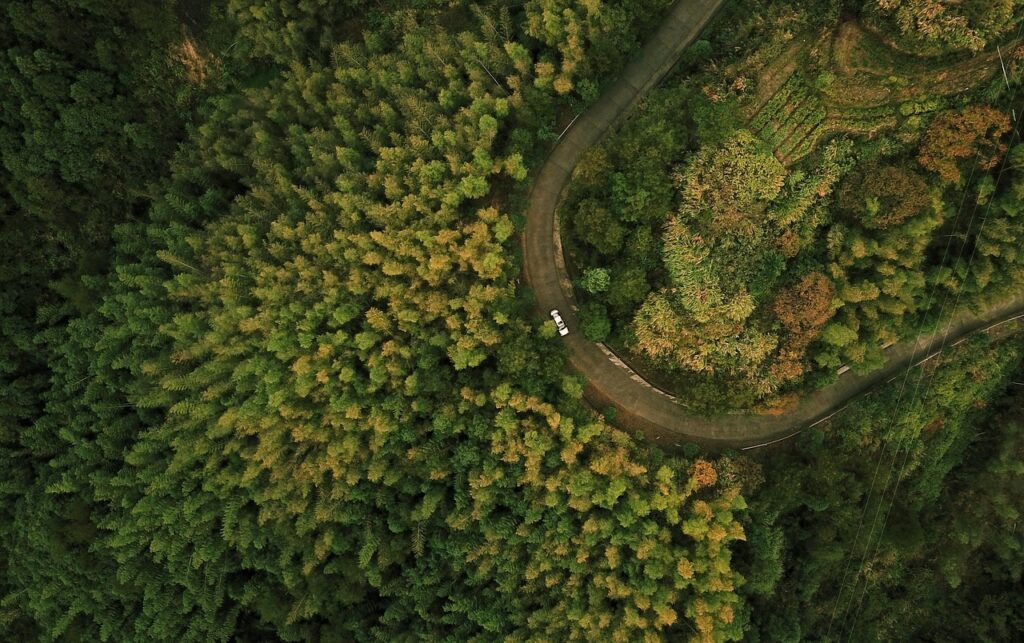
Drones capture detailed images and information from overhead. Equipped with smart cameras and sensors, drones can hover above rugged terrain or pierce through dense forests, seizing crystal-clear photos and plotting the land underneath. They enable data to be collected from difficult-to-traverse locations, reducing both time and effort. Drones can operate year-round, through harsh weather or on rugged slopes, so work doesn’t grind to a halt during difficult seasons. They assist in mapping changes in the forest, such as tree growth or death, and can detect indications of fire or animal activity. A drone can survey multiple hectares within an hour and, equipped with special sensors, can measure leaf color, tree height, and even carbon stored in plants. It’s this kind of data that is crucial for monitoring forest health and planning sustainable logging or conservation efforts.
By integrating live weather and environmental data with GIS, forest managers can see risk in real time. GIS platforms pull together data such as rainfall, wind, soil type, and temperature to identify areas that may be vulnerable to fire, flooding, or drought. They facilitate planning for emergencies or habitat protection. For instance, early signs of drought stress in trees can be paired with weather forecasts to alert to increased fire risk. The very system can indicate where wildlife might migrate if their environment shifts, preserving biodiversity and maintaining ecosystems.
Automated alerts and reporting set up with these tools keeps everyone in the loop and prepared. The steps are:
- Choose the key data sources (sensors, drones, satellites).
- Connect these sources to a central GIS platform.
- Establish thresholds for alerts such as heat spikes or dry soil.
- Build simple dashboards for real-time updates.
- Schedule messages or reports to send to teams.
- Test and adjust the system as needed.
These steps ensure data is gathered and employed to inform action. Employing such a solution makes forest planning more dynamic and enables forest management to achieve an optimal balance between forest health, utilization, and conservation.
Applications across industries and innovative use cases
GIS is now a core technology across 17 plus industries, empowering organizations to apply location data to solve real-world challenges. At its heart, we help make location-based information intelligible, mappable, analyzable and shared to support smart decisions. As digital data and sensors have proliferated, so has the footprint of GIS everywhere, influencing how cities design their next master plan, businesses transport their products, and health officials follow a contagion.
Public health uses GIS to track disease outbreaks and medical resources. In the COVID era, numerous nations deployed location data to operate contact-tracing programs and steer social distancing. Using GIS, public health authorities can observe emerging hotspots, follow the propagation of illness, and locate testing or care facilities where they are urgent. Machine learning combined with spatial data helps detect patterns in outbreaks, enabling agencies to respond rapidly and prevent larger issues. Wearables tied to GIS can track the location and vitals of first responders with precision, ensuring assistance reaches those who are most at risk in the field.
Logistics and supply chains benefit from GIS by employing spatial analysis to plot routes and maintain the flow of goods. Businesses can chart optimal courses for trucks, ships, or drones, reducing fuel consumption and wait times. With more connected devices expected to comprise 40% of all IoT devices by 2025, location-based insights are poised to expand further. For instance, a worldwide shipping company can leverage GIS to monitor containers, observe traffic conditions, and reroute in real time if there is a road blockage or holdup. This velocity and adaptability assist in maintaining robust supply chains, even when shocks strike.
GIS strikes at the heart of urban development, which relies on GIS to model land use, zoning and infrastructure. Planners can map where people live, commute and require services. GIS helps locate where new schools, water or transit stops should be placed. It’s utilized to observe how new developments affect traffic, parks, or the environment. In our fast-growing cities, this data-driven approach guides decisions that create smarter places to live and work.
GIS finds a home in many other industries. In farming, it guides farmers to select the optimal land, such as south-facing slopes that shield crops from cold winds. In risk management, for instance, geospatial analysis of satellite images can assist in spotting wildfire threats or climate risks in their infancy. As more organizations turn to location intelligence software, 36% of large and mid-sized firms will be doing so next year. GIS will continue uncovering new applications.
| Industry | Key GIS Application | Unique Benefit |
| Healthcare | Disease mapping, resource planning | Targets interventions, saves lives |
| Logistics | Route optimization, asset tracking | Cuts costs, boosts speed |
| Urban Planning | Land use, zoning, infrastructure design | Smarter growth, better services |
| Agriculture | Site selection, crop monitoring | Higher yields, less risk |
| Emergency Response | Location monitoring, safety management | Faster response, safer teams |
| Climate Science | Satellite imagery, risk analysis | Early warning, stronger resilience |
Overcoming challenges and ensuring ethical GIS adoption
GIS is a powerful technology for mapping, tracking and addressing real-world issues. Using it well presents real challenges. These span from data privacy and quality to larger questions of fairness and trust, particularly when GIS is deployed to address social concerns such as overdose disparities or public health gaps. Ensuring GIS empowers everyone and doesn’t exploit or exclude requires intentional action every step of the way.
Data privacy is a major consideration. GIS frequently includes sensitive information regarding where individuals reside, are employed or receive treatment. If this information falls into the wrong hands or is utilized carelessly, it can do damage. To protect data, it is important to implement stringent access controls. Only those who have to have the info should see it. Techniques like anonymization, stripping away names or precise addresses, safeguard individuals’ identities. For instance, if you’re mapping overdose hotspots in a city, your data should reflect general patterns and not identify specific houses or individuals. Installing firewalls and strong passwords keeps the bad guys out. These measures establish trust, particularly in communities previously misused or ignored.
Data quality is equally critical. Bad data can lead to bad decisions that do more harm than good. This is a genuine danger when examining large problems such as poverty or healthcare disparities, where the stakes are substantial. In order to maintain data hygiene, there should be defined standards for gathering and verifying it. Validation checks, such as cross-referencing or conducting random audits, assist in recognizing malfunctions as quickly as possible. Business with computer updates to keep maps and trends current, not yesterday’s paper! For example, if public health teams leverage GIS to monitor disease outbreaks, stale or flawed data could translate into delayed or inaccurate responses. It’s that careful data work that makes GIS a tool leaders and the public can trust.
Be transparent about how you source data and how you make choices. They deserve to hear where data originates and what processing steps frame the finished maps or models. This is equally true for GIS, whether it is for city planning or disease tracking. Open-sourcing the data and methodologies, perhaps via public reports or dashboards, allows others to audit the work and identify any bias or omissions. Such transparency helps maintain integrity and aligns with international standards such as the Locus Charter. It respects the people whose lives and narratives are embedded in the data.
- Guidelines for responsible GIS use: * Obtain informed consent when gathering personal or community information.
- Implement anonymization techniques.
- Validate data prior to use and refresh frequently.
- Share techniques and resources for complete openness.
- Involve the community in planning and review.
- Beware of effects on marginalized communities.
- Adhere to global charters and best practices.
- Recruit public health, social science, and tech experts to inform work.
Conquering ethical GIS adoption demands a wide perspective. Collaborating with multiple disciplines, such as public health, social science, and computer science, injects broader expertise and perspectives into the mix. It’s crucial to hear from those who know the community best. Community members can identify blind spots or dangers outsiders overlook. To illustrate, in a project mapping the lack of healthcare in rural areas, locals might know why certain clinics are shunned or what roads are dangerous. Their voices inform more thoughtful, equitable solutions.
Emerging trends and future directions in GIS technology
GIS technology is evolving rapidly, driven by innovative tools, larger datasets, and a drive towards accessibility. Many different areas are employing GIS for more than just maps. It aids pattern discovery, tracks change, and even predicts.
The mashup of AI, ML, and GIS was one of the most significant innovations. AI can sift through massive stacks of geospatial data, identify patterns, and make predictions. For instance, city planners utilize machine learning to analyze traffic data and recommend alternative routes. Health agencies map and track disease outbreaks, with AI used to identify early warning signs. In agriculture, AI predicts crop yields using soil, weather, and historical data, all visualized in real time. Geo-AI, which associates AI tools with location data, simplifies extracting relevant information from satellite imagery. This accelerates processes such as disaster response or verifying deforestation.
Cloud-based GIS platforms are increasing in popularity. These tools enable teams to collaborate from any location. Cloud storage means you can access maps and perform analysis without expensive hardware. This simplifies scaling for large endeavors, such as monitoring buses in an urban area or managing global climate models. For even smaller groups, cloud GIS makes the tools cheaper and easier to use; less training is required. It paves the way for real-time updates during disasters or tracking wildfires, for instance.
Open data is enabling broader GIS usage. Governments and organizations now post massive location datasets for free. Start-ups, researchers, and even students can develop valuable maps and applications. Open data projects, like OpenStreetMap, allow users to modify and enhance the map for all. This results in improved, more accurate data for activities such as designing new bike paths, monitoring flood risks, or following animal migration. The open data movement opens the door for more folks to study and apply GIS, even in low-resource countries.
Looking ahead, new tools such as augmented reality (AR) mapping and real-time 3D views are on the horizon. AR enables users to view data over the real world, which speeds up fieldwork or repairs. For instance, a repairman fixing pipes can view underground lines using a tablet. 3D maps assist planners in visualizing new buildings and roads in fine detail, which is essential for smart city planning or validating flood zones. The boom of IoT has led to more sensors providing real-time data to GIS, such as weather, traffic, or pollution data. This assists cities, farms, and logistics companies in making rapid, intelligent decisions.