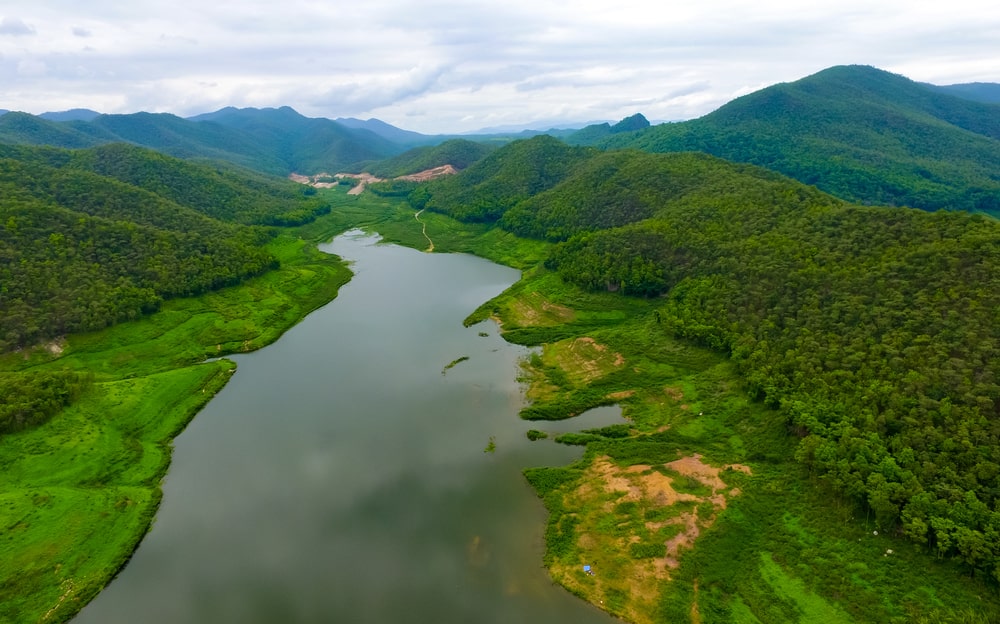
Climate change and its effects on forest ecosystems
Climate change is affecting forests in lots of different ways. Increased air and soil temperatures, less reliable rainfall, and more extreme storms or drought strain trees and the wildlife they support in new ways. These forces alter forest growth and what they can offer us and the natural world.
Increased temperatures, altered rainfall, and extreme weather
Forests around the globe now experience warmer days and nights. In certain areas, average temperatures have increased by more than 1°C in as little as a few decades. This increase accelerates the growth and leaf-fall of trees, but it can cause stress in some species unaccustomed to the warmth. Rainfall is changing, as well. Some places experience intense precipitation in short-duration downpours, and other places experience less rain or prolonged drought. This inconsistent water availability increases the difficulty for trees to maintain consistent growth. Storms, hurricanes, and extended dry periods occur more frequently in many areas, resulting in more tree damage and slower recuperation for already stressed forests. For instance, the Amazon Basin experiences harsher droughts while certain regions in Southeast Asia witness constant storms that knock down saplings and ancient trees alike.
Shifts in species, forest health, and productivity
As climate zones shift, the composition of trees and plants in forests shifts. Cool, wet-weather trees may give ground to tolerant heat and dry spells. This transition can result in decreased diversity within a forest, thereby rendering it more vulnerable to subsequent change. In Europe, Norway spruce is yielding to beech and oak in much of the uplands. In East Africa, highland forests are giving way to more drought-tolerant shrubs as rains decline. These shifts impact not only the trees but the insects, birds, and mammals that rely on them. While others grow or yield more wood, fruit or resin that damages local economies. Forest health suffers, as stressed trees are more susceptible to pests and diseases.
More pests, diseases, and wildfires
Warmer weather causes many insects and fungi to breed faster and spread farther. In Canada and the US, bark beetles now flourish in regions that were once too cold for them. Once they assault a distressed tree, it quickly succumbs, leaving behind pockets of dead wood to stoke wildfires. With drier soils and longer dry seasons, wildfires can ignite more frequently and burn more acreage. In Australia, it’s more heat and less rain that have caused massive bushfires, while Mediterranean regions contend with them almost every summer. These fires do more than just burn trees; they devastate soils, water, and air quality for those in proximity.
Effects on ecosystem services and communities
Healthy forests sequester carbon, purify water, and reduce flooding. Climate change interferes with the forests’ ability to perform these tasks effectively. A stressed or damaged forest stores less carbon, leaving more CO2 in the air to accelerate warming. Less stable rainfall and tree cover can exacerbate floods or desiccate springs, damaging farms and cities downstream. In the Himalayas, warming-driven shifts in snow and rain are causing flash floods as well as water scarcity for millions. When forests lose diversity, they can’t protect as many birds or pollinators, which can damage farms and wild vegetation. Forest-dependent communities will be at increased risk as the climate stress grows.
Evolving silvicultural objectives and practices
Silviculture today must be about more than growing trees for wood or fiber. Now, with climate change, forest managers need to consider how forests can remain healthy, provide sustainable yields, and aid in carbon storage over the long term. The aim isn’t simply to keep forests standing, but to prepare them for a future of more droughts, storms, fires, and pests. This transition introduces novel approaches to species selection, tending of sapling stands, and planning for the next.
| Practice | Traditional Focus | Climate-responsive Focus | Impact on Forests |
| Monoculture planting | Single fast-growing species | Mix of species for varied traits | More risk of disease vs. better resilience |
| Fixed rotation cycles | Set time for harvest | Flexible, based on forest health | Predictable yields vs. adapting to change |
| Uniform thinning | Even thinning for light/space | Targeted thinning for stress adaptation | Simple growth boost vs. stress control |
| Clear-cutting | Remove all trees in a block | Patch or strip cuts, limit soil exposure | Fast turnover vs. soil and habitat care |
Tree choice is shifting quickly. A lot of places are now favoring native trees while exploring species from hotter or drier climates. These trees might get less rain or more heat, assisting the forest in withstanding change. For instance, in southern Europe, managers sometimes plant cork oak or Aleppo pine where local oaks would fail. In Australia, they use spotted gum and Sydney blue gum in new forests. These trees thrive in drought and bounce back from fire. Choosing the right trees involves considering future climate, soil, and pests, not just what has worked historically.
We must change how we thin, harvest, and regenerate forests. Old silvicultural objectives and practices relied on fixed dates and explicit guidelines, but emerging patterns of rain and heat make these guidelines unreliable. Today’s managers thin trees more frequently to maintain spacing and health, reducing the risk of fire and disease. Harvesting can utilize smaller patches or strips rather than clearcutting large blocks. This allows soil to maintain its cover and permits wildlife habitation. When regenerating new trees, managers might experiment with direct seeding, mixed planting, or leaving some mature trees behind as shelter. They assist small trees to overcome hard beginnings such as drought or heat waves.
Today’s silvicultural objectives and practices might not work tomorrow. Forest planning must now remain open to change. Managers have defined objectives for wood, carbon, and wildlife, and they monitor frequently for emerging risks or opportunities. They revise objectives if insects migrate, fires intensify, or new varieties demonstrate better performance. This means maintaining good documentation, employing new information, and consulting with other specialists or local inhabitants familiar with the terrain. The goal is to decide on things that work now and for what might come next, without cementing yourself into one direction or one solution.

Adaptive management strategies for new climate realities
Adaptive silvicultural management is to say that we should utilize flexible strategies to contend with the uncertainties of climate change. Forests across much of the globe increasingly contend with recurrent droughts, erratic storms, elevated temperatures, and pest invasions. To maintain forest health and productivity, managers must apply pragmatic methods that evolve as the world does.
Implement monitoring systems to track forest responses and inform timely management adjustments
A first step is to establish robust monitoring. These systems assist in monitoring how forests respond to changes in weather, such as drought or heat, and to emerging pests or diseases. Simple instances are monitoring soil moisture, tree growth, and canopy cover with remote sensors. In Canada and Sweden, for example, managers combine satellite data with ground checks. This combination simplifies the ability to quickly identify change, such as drought stress to trees or early indications of beetle infestations. When the data indicates a significant change, managers can intervene early by modifying thinning schedules, shifting planting dates, or applying mulch to retain moisture. The objective is to maintain healthy forests before it’s too late.
Develop risk assessment frameworks to prioritize interventions against threats like drought, pests, and fire
Risk assessment frameworks are tools that help managers see which threats are most likely and could do the most harm. These frameworks use local climate data, species profiles, and past records of droughts, pest attacks, or fires. In Australia, managers map out zones at highest fire risk by looking at past fire patterns, weather forecasts, and fuel loads. By knowing which parts of a forest are most at risk, managers can focus resources where they have the biggest impact. This might mean creating firebreaks, using targeted pest control, or shifting water to the driest zones. A clear risk map lets managers act before small problems grow into big losses.
Promote mixed-species stands and structural diversity to buffer against climate uncertainties
Mixed forests resist change more robustly. Planting more than one tree species in the same area mitigates risk. If one species succumbs to drought or a new disease, the others can continue growing and help support the ecosystem. In Germany and Brazil, for example, mixed-species stands survived heat waves and pest outbreaks better than single-species stands. Structural diversity—trees of many ages and sizes—provides great help. Older trees shade saplings and roots at varying depths can swap water. These steps make forests more resilient and more capable of rebounding when struck by stress.
Create contingency plans for rapid response to extreme events, ensuring forest recovery and continuity
Wildfires, big storms, or insect outbreaks occur more frequently than before. Having a clear, simple plan for what to do helps forests recover faster. These would be action-oriented plans — where to plant seedlings after a fire, which species, and how to stanch erosion. In Japan, after typhoons, crews deploy predefined plans to remove debris and replant hillsides to prevent landslides. Having tools and seeds on standby and staff trained on call means you can begin taking action immediately, not weeks down the road. This minimizes losses and keeps forests resilient and productive into the future.
Integrating technology and innovation in silviculture
About: Merging technology and silviculture It addresses the real issues from climate changes, such as these shifts. They fortify forests and make them safer for the future.
First, remote sensing, GIS, and modeling tools make it possible for us to visualize and monitor forests like never before. Remote sensing employs drones, satellites, and sensors to capture detailed images and gather information on tree vitality, canopy cover, soil moisture, and beyond. This provides rapid, extensive monitoring of forest health, even in remote areas. GIS, or geographic information systems, map all this information. With GIS, we’re able to identify patterns, such as where fires might ignite or pests might spread. Modeling tools then take this information to predict what is likely to occur, such as how a forest might shift with warmer temperatures or reduced precipitation. Take, for instance, a Canadian forester who can use these tools to monitor bark beetle infestations. Here in Brazil, these tools assist in mapping which parts of a forest are at greatest risk of drought. These instruments all converge to indicate where assistance is required the most.
Precision forestry is another big step forward. It involves applying GPS-guided equipment, sensors, and intelligent mapping to design and execute all phases of forestry. Rather than plant, thin, or harvest the same way everywhere, precision forestry allows you to nurture each location according to its specific requirements. This reduces waste, conserves water, maintains soil health, and safeguards flora and fauna. For instance, a manager can use soil sensors to identify areas where moisture is low and only irrigate those locations. In Finland, harvesters equipped with GPS and onboard computers select trees to cut, allowing the healthiest to flourish. Less fuel is consumed, and fewer trees are accidentally scarred. This approach allows the forest to regrow robustly and reduces landscape damage.
Data analytics goes beyond silviculture. With all that data from sensors, drones and weather stations, they can analyze patterns, verify what’s effective, and optimize decision-making. This gives managers the ability to rapidly adjust plans if a threat is detected, such as rerouting crews from a fire area or rescheduling planting dates due to delayed rainfall. Data analytics assists in revealing which tree species are thriving under emerging climate conditions. To the south, managers in South Africa rely on years of weather and growth data to select optimal planting dates. In Germany, the data detect early symptoms of disease so immediate action is possible.
Biotechnology is beginning to play a key role. Better seed varieties, bred to resist drought, pests, or emerging diseases, can assist forests weather challenging times to come. They may be seeds from natural breeding or lab work, but the aim is consistent — trees that survive climate stress. For instance, in Southeast Asia, new teak strains are being planted that fend off root rot and thrive with less rain. In Sweden, they engineer pine seeds that fare better against warm winters. Though they argue about using biotech, the urgency of permanent forests makes them consider every advantage.
Collaborative research and partnerships for resilience
Collaborative research and partnerships for resilience No one group has all the solutions, so collaboration across disciplines and national boundaries plugs holes and introduces fresh perspectives. These partnerships connect governments, researchers, businesses, and local communities, facilitating the exchange of best practices, resource sharing, and addressing challenges too large for one group to address.
Cross-sector collaborations pair up people from government, universities, the timber industry, and local organizations. When collaborating, each group contributes a different skill set. For instance, government agencies could establish clear rules and provide funding. They collaborate with universities, which provide research and data. The timber industry contributes practical expertise about what is actually occurring in the field, and local communities provide insights into what they observe and require on the ground. In Sweden, for example, forest masters have joined forces with researchers and rural communities to experiment with new methods of cultivating trees that can endure heat and drought. This diversity of perspective frequently produces superior problem solving because it spans a wider area.
Data, tools and sharing best practices are key to learning and adapting fast. Regional and global networks such as the International Union of Forest Research Organizations (IUFRO) enable the dissemination of new insights and lessons learned. These networks provide forums to exchange ideas, benchmark results, and discuss what works for their forests, be it in Canada, Germany or Brazil. When we all share our knowledge, it accelerates progress and reduces the possibility of reinventing the wheel. To keep research robust, each site should collaborate with a statistician who specializes in designing studies and monitoring trends to ensure their work remains rigorous and impactful.
Starting joint research projects to test new adaptation strategies for forests in the face of climate change. These projects tend to address both immediate solutions and future-oriented solutions. Take, for instance, the Adaptive Silviculture for Climate Change (ASCC) project in North America, which unites land managers and scientists to experiment with new types of planting, tree mixes, and thinning plans, all with an eye toward making forests more resilient against droughts and pests. These initiatives not only prototype innovative insight but demonstrate how collaboration drives impact and empowers leaders to apply these learnings in practice.
Platforms for knowledge exchange and joint action are required to have everyone on the same page. These platforms, whether in the form of regular workshops, online forums, or field days, allow for open communication, trust, and shared understanding. Plain-spoken communication is essential as it allows all partners to visualize the grand vision and move toward common objectives. Success requires long-term commitment and the nimbleness to pivot as new challenges arise. By combining diverse perspectives and expertise, these collaborations can identify clever and more practical solutions to challenging issues in forest management.
Socio-economic impacts and community adaptation
Climate change is adding new stresses to forests and the communities that depend on them. Silviculture — how we tend and cultivate forests — must adapt to keep pace. These changes extend beyond the trees. They affect livelihoods and employment and even regional cultures everywhere. Millions of individuals in rural and forested regions rely on timber, non-timber products, and the employment forests provide. When heat, drought, and pests endanger forests, the imperative to innovate adaptation becomes urgent. Local communities play a significant role in this because they understand their forests most intimately.
- Planting native species that can withstand drought or storms is selected by elders or community councils.
- Shifting harvests with rains from old weather indicators
- Implementing early fire warning systems with both traditional wisdom and new innovations such as mobile apps.
- Forming Forest Watch groups that mix local patrols and outside experts.
- Operating seed-saving banks for local varieties of trees, managed by women’s groups or youth collectives.
- So using agroforestry, such as intercropping food and trees, is informed by what local farmers have been doing for decades.
- Rehab ancient forests with support from student assignments or community websites.
Backing these local initiatives is about more than just providing financing. It means hearing what people desire and require, and ensuring their voices influence determinations. In certain areas, village councils or co-ops now head replanting or fire control, choosing techniques that suit their customs and the soil’s requirements. Including them in planning maintains both healthy forests and culture. It aids the diffusion of innovations since trust is already in place.
Assisting forest communities to adapt frequently translates into education and equipment. Several communities now instruct new trades, such as cultivating mushrooms, beekeeping, or conducting eco-tours. These measures assist households in generating income in multiple ways, so they’re less vulnerable if timber sales decrease or storms strike. Others have initiated small business funds or shared equipment banks, facilitating experimentation. Training is often combined with easy checklists or peer-led instruction, so all can participate, regardless of their educational experience.
Policy support has an impact. If rules are fair, it’s easier for people to adapt. Great policy can ensure climate cash really gets to where it’s needed. That includes straightforward criteria for accessing assistance, simplified procedures to receive financing and assistance for cohorts that might otherwise be excluded, such as women, young people or smallholders. Certain nations provide free advice or even grants to local projects these days, while others connect with international funds that support community efforts. Providing technical assistance, such as support with mapping or soil testing, ensures that communities are able to design and implement projects on their own initiative.
Lessons from regional adaptation case studies
Adaptation in silviculture is influenced by numerous local variables. Regional case studies illustrate how climate change demands new forest management strategies. They highlight what works and what doesn’t. These lessons assist others in preparing for change, even in very different locations.
- Wide stakeholder consultation. Engaging local communities, landowners, and laborers in the decision-making process fosters trust and ensures solutions remain anchored in actual needs. For instance, in Sweden, open discussions with Sami reindeer herders resulted in new thinning schedules that satisfied both timber objectives and indigenous lifestyles. In Canada, First Nations groups influenced fire management to protect forests and cultural sites.
- Flexible, incremental planning Good adaptation means plans can evolve as new information arrives. From case studies to lessons on regional adaptation In Germany’s Black Forest, managers apply frequent checks of tree health and growth, adjusting thinning or planting as drought risk shifts. In the southeastern US, forest owners swap between pine species as heat and storm patterns change, employing short rotations and mixed-stand experiments to determine what grows best today and tomorrow.
- Species and genotypes mix Indigenous forests with diverse species and seed sources resist pests, storms, and changing weather better. In Australia, trials with both native and non-native eucalypts across dry and wet sites have demonstrated that a wider genetic mix results in less total losses, even in difficult drought years.
- Taking a lesson from local adaptation case studies, small-scale trials allow managers to test out new planting densities, species, or harvest timing before deploying them more broadly. In China’s subtropical forests, side-by-side plots of mixed and pure stands have revealed that mixes with native broadleaves recover more quickly following storms and heat waves.
- Continuous learning and knowledge transfer. Teams that continue learning from each other and from outside experts adapt more quickly. Annual workshops in Chile unite state and private foresters alike to discuss new pests or rainfall patterns, exchanging practical knowledge about what works in the field.
- Robust oversight and response. Fast local data on growth, pests, and weather help managers identify issues ahead of time. In Finland, inexpensive sensor networks monitor soil moisture and frost, enabling teams to modify thinning or undergrowth clearing to lower fire or storm risk.
Results vary by climate, forest type and method. For instance, boreal forests in Canada transition to more fire-adapted species and plantations in Southeast Asia emphasize water-saving and pest-resistant varieties. In temperate Europe, flexible thinning schedules and wider species selections demonstrate reduced losses due to heatwaves. Australia’s dryland forests put drought-tolerant provenances and spacing to the test, with mixed results but obvious resilience gains.
Transferable practices and lessons
| Practice | Where Used | Key Lesson |
| Stakeholder involvement | Sweden, Canada | Plans fit local needs, higher trust |
| Flexible planning | Germany, US | Adapts to new info, faster response |
| Species/genotype mixing | Australia, China | Reduces risk, better recovery |
| Pilot/testing plots | China, Australia | Lowers failure, tests ideas on small scale |
| Joint learning/training | Chile, Finland | Spreads new tools and tactics quickly |
| Real-time monitoring | Finland, Germany | Problems caught early, less loss |